
Exploring Science Fiction in Spanish (2010–2015)
Between 2010 and 2015, I ran a blog with a simple goal: to help shine a light —however small— on Spanish-language science fiction, especially in film, web series, and comics. I reached out to creators, asked about their work, and built each post around those conversations.
I'm deeply grateful to everyone who shared their time, ideas, and creative journeys. This project exists because of their generosity.
What you'll find here is a collection of those posts. Think of it as both an archive and an invitation: dive in, explore these works, discover where to experience them, watch them, read them, and follow the creators behind them.

FEATURE FILMS
La Parte Ausente
(Alejandro Israel)

La Parte Ausente follows Chockler on a relentless search for a man —dead or alive— within a world on the verge of collapse.
The film was shot over five weeks, mostly during cold and dark winter nights, which helped shape its atmosphere and tone.
We used a Red Epic camera at the request of the Director of Photography, ensuring a high level of visual quality throughout the production.

The film had an approximate budget of $400,000, funded through a combination of public and private resources.
Camera: Red Epic
Budget: U$400.000
Nova
(Ezequiel Romero)
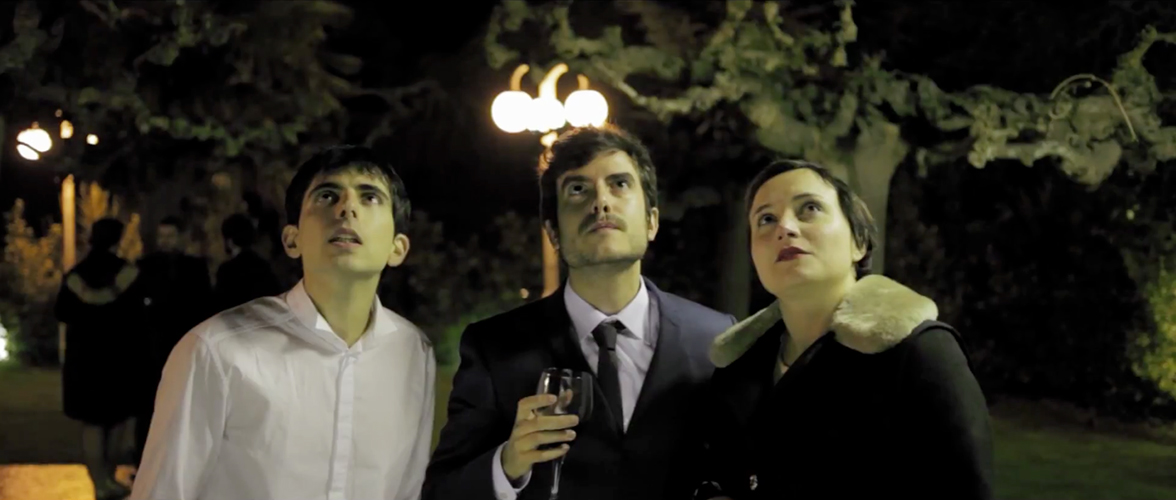
Nova was conceived as an experiment. It was shot in just 24 hours, with all dialogue improvised. I imagined a world that first celebrates beauty and then slowly fades away as the light from a distant supernova reaches it. To film nearly an hour of footage in a single day, we split the crew into two units, each following one of the main characters. We used Canon 5D cameras simply because they were affordable and easily accessible.
The cinematography in Nova was entirely organic. It emerged from the efforts of our directors of photography to achieve a professional or semi-professional look with virtually no budget and minimal lighting. With only 24 hours available, there was no time for careful setups —we had to move quickly and adapt constantly.
All resources —props, permits, and catering— came out of the directors' own pockets. The entire film was made for around $500. Nova is a true DIY project, driven purely by our passion for filmmaking.

(Spoiler alert: don't continue if you haven't seen the film) We only planned the opening and final scenes—the moments where all the characters come together. As filming progressed, the story evolved through the actors' improvisations, and eventually we lost control of the narrative. At one point, I called Bruno, the other director, and said: "We just killed our main character —you'll have to come up with a new ending".
Predicting the future of film distribution is difficult. Audiences need to be re-educated to support cinema financially and understand that films cannot exist without that support. At the same time, we can't expect people to pay the same prices as in the past, when production and distribution costs were much higher. Independent video game and music creators have adapted more effectively to the new economy —perhaps it's time filmmakers start learning from them.
Camera: Canon 5D
Budget: U$ 500
The 2nd Horseman
(Arthur Cross)

As an ultra fan of sci-fi and action movies, I felt a natural need to create something that combined both genres, even though neither of them has been widely explored in my own country, Peru.
Science fiction is a genre that allows me to explore the relationship between humanity and the universe, and more often than not, the difference in scale between these two elements —humanity as a mere speck of light in the vast, impossible void of time and space.
With that in mind, The 2nd Horseman tells the story of the struggle between two factions vying for control over a single girl, who holds the destiny of humankind in her hands after returning from an alternate dimension.
Although filming is still in progress, the trailer —assembled from early footage— has already received favorable reactions from the public, suggesting that this blend of genres is something people want, even in Peru.
For The 2nd Horseman, I used independent filmmaking techniques and resources such as the Canon 5D Mk2 and Mk3, a wheelchair adapted as a dolly, and a great deal of post-production work and visual effects. The goal is to optimize limited resources in order to achieve the highest possible production value despite the inherent challenges of working on a project of this kind.
Fortunately, the internet has helped break down many of these barriers by providing know-how, tips, strategies, and information, while also expanding the possibilities for independent films to reach an audience. New distribution channels through streaming services make it easier for indie films to find their way into international festivals via digital transfers.

The future looks promising for independent cinema. As science fiction increasingly becomes science fact, new filmmaking tools, post-production technologies, and distribution networks continue to expand the creative possibilities for filmmakers around the world.
Camera: Canon 5D Mk2 and Mk3
Budget: ?
Proxima
(Carlos Atanes)

I made Proxima because, as a child, I was a huge fan of science fiction films. I wanted to recover that sense of wonder I felt watching movies like Silent Running, 2001: A Space Odyssey, or Planet of the Apes. Proxima is a tribute to those works and to all the dreamers who imagine humanity reaching the universe.
Making Proxima was a chaotic and unforgettable experience, full of intense moments. There is even a documentary about the process titled Made in Proxima, available on the film's official website. One of the most dangerous situations happened while filming alien landscapes at the bottom of Corta Atalaya, the largest open-pit mine in Europe. A red lake of sulfuric acid released toxic fumes while a violent storm triggered landslides around us, creating a real risk of collapse and flooding. Another extreme moment involved filming the lead actor, Oriol Aubets, with real ammunition.
The shoot lasted between 30 and 40 days, though I eventually lost count.
For the technical side, I left cinematography in the hands of our director of photography, Joan Babiloni, a highly skilled professional. He chose a JVC HDV camera. The visual style was shaped by the budget, his creative approach, and our early discussions about lighting, tone, lenses, and color. I shared references from 1970s and 1980s science fiction comics and illustrators. We studied how Enki Bilal built cold alien worlds using warm palettes, and also looked at artists like Chris Foss and Tim White. From there, Babiloni developed a coherent color scheme that guided costumes, props, and set design. Most of the visual result was achieved in-camera, with minimal correction in post-production.
Regarding the future of cinema, I believe it will split into two extremes: high-budget productions and ultra-low-budget films. Big-budget films have strong financing and marketing structures, while low-budget films can survive with minimal costs and occasional success. The middle range, however, is increasingly unsustainable and depends heavily on subsidies, especially in Europe. I believe that segment will continue to shrink.
Proxima had a budget of approximately $65,000 to $70,000, financed through personal contributions from friends and, most importantly, a bank loan that we are still repaying. That is the less romantic side of independent filmmaking.
Camera: JVC HDV
Budget: U$ 70.000
Zohe
(David Contreras)
I enjoy stories of all kinds, across every genre.

Science fiction, in particular, is especially meaningful to me. It allows me to play, invent, and build extraordinary stories with unusual characters, sometimes without needing to explain why they behave the way they do. It also opens the door to imagining parallel realities and exploring what our world or the universe could become, often reflecting on human behavior and society in the process.
Zohe is exactly that kind of story: it follows an ordinary man who, after a great universal cataclysm, fights for his freedom and for love.
We shot the film using a Canon 7D. I had never worked with Full HD before, so it was a real pleasure to see that level of sharpness and image quality on screen.
Zohe received support from the government of my country, and several public and private companies joined the project to help bring it to life. Still, securing the resources was far from easy, and the process was long and complex.
Over the years, I've learned a great deal, especially about creativity and improvisation. Things don't always go as planned, whether due to limited resources, unpredictable weather, or other unexpected setbacks. When that happens, you have to react quickly and find effective solutions. During filming, there were moments when I had to rewrite or shorten scenes on the spot. With the actors ready and the technical crew in place, I would quickly analyze the surroundings and reshape the scene. I even started bringing sheets of paper to sketch new shots directly on set when necessary.
Looking back, poor planning was one of the biggest challenges in earlier productions. This time, despite the difficulties, we managed to move forward and make the most of every shooting day.
I'd like to end with a thought I truly value: Life is short. We are just passing through this planet.
Camera: Canon 7D
Budget: ?
La maquina que escupe monstruos y la chica de mis sueños
(?)

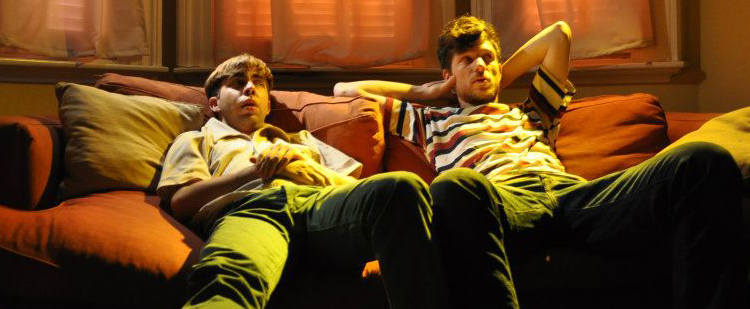
The project was born from a simple desire: to create the kind of film the directors themselves wanted to watch —one that breaks away from traditional Argentine aesthetics. Both filmmakers are passionate about animation and deeply admire directors who bring animated logic into live-action cinema, such as Terry Gilliam, Sam Raimi, Peter Jackson, and Tim Burton. This influence became the foundation of the film's identity: a live-action feature driven by cartoon logic.
The film is packed with references to South Park, Tex Avery, Hanna-Barbera, The Simpsons, and Richard Williams. At the same time, Labat and Ross are devoted fans of science fiction and B-movies, turning the project into a playful and chaotic blend of all these influences.
The movie was shot on a Canon 7D, chosen simply because it delivered the best image quality within their limited budget. The visual results exceeded expectations. The filmmakers deliberately reject realism —especially the naturalistic style often associated with Argentine cinema— aiming instead to build a world ruled by animated logic and visual absurdity.
The shoot lasted 22 days, with an ultra-low budget of around $5,000 USD. From the beginning, they committed to writing, shooting, and releasing the film online within a year—and they achieved it. Many collaborators contributed their time, skills, and resources, while most of the funding came directly from the filmmakers themselves.
According to Labat and Ross, the internet has fundamentally transformed how we experience cinema. While musicians have embraced digital platforms, filmmakers have often been slower to adapt. However, audiences are already watching films on computers and mobile devices —streaming, downloading, and sharing content freely. Rather than resisting this shift, they believe filmmakers should embrace it.
For them, the internet is not a threat but a powerful tool —one that democratizes film distribution and allows creators to reach global audiences on their own terms. Their main goal has always been simple: to have their film seen by as many people as possible. In their view, the future of cinema lies in understanding and harnessing the creative freedom and reach that the internet provides.
Camera: Canon 7D
Budget: U$ 5.000
Juan de los muertos
(Alejandro Brugués)

Juan was an idea that stayed with me for a long time. I'm always taking notes and developing stories until one of them refuses to leave my head —that was Juan. I've always loved zombie films, and this project gave me the chance to combine genre storytelling with social commentary, which felt like the perfect match. There are many anecdotes from the shoot. On the very first day, when we brought the zombies out into the street to attack an elderly man, one of the actors got carried away and actually bit him, taking a piece of skin from his arm. So yes, we had a real "zombie” on set. We even brought him back for a few more scenes. On another occasion, neighbors called the police after seeing fake body parts in the street. Eventually, officers even showed up on set — but once they realized everything was staged, they simply helped us keep things under control. There are many more stories like that; I could honestly write a book.
Although the film turned out very close to what I had envisioned, production always requires adaptation. I hadn't planned to shoot so much handheld, but the schedule was extremely tight, and using dollies and cranes as much as I wanted simply wasn't possible. We also couldn't wait for perfect lighting or ideal conditions — if a scene wasn't shot that day, there was no second chance. We had to move fast, which is often the reality of filmmaking. The budget was 2.3 million euros. And no, there's no dramatic story about the financing — no one sold their soul. The truth is simpler: everyone involved believed in the project and wanted to be part of it. We shot the film in 44 days using the Red One camera. The choice came from our director of photography, Carles Gusi, whom I fully trust. I don't miss shooting on 35mm. Digital still has its limitations, but it also offers clear advantages — especially in projection, where you avoid scratches, reel changes, and other mechanical issues. In that sense, I genuinely enjoy working with digital cinema.
Camera: Red One
Budget: € 2.3 million
Marihuana Radioactiva Interplanetaria
(Marcelo Leguiza)
My main motivation for making this film was to celebrate the 12th anniversary of our production company — and what better way to do it than with a movie? At that time, we were working on Mocosis, which turned out to be more complex than expected. So we paused that project and decided to shoot Interplanetary Radioactive Marijuana instead, mainly because it was more feasible to complete quickly.
The film was shot entirely on a PAL Sony PDX10 — the only camera we had available at the time. After finishing the movie, I upgraded to a PAL HDV Sony V1, and today we are working with a Canon T3i.

About 60% of the film was shot in just two days, with an additional seven days used for extra scenes. Most of the footage was recorded in summer, while some scenes were completed in winter. We really suffered through the cold, especially since we were still wearing summer clothes.
The total budget was only $500. The alien costume was not originally made for the film — it was created as a hobby by a technician who later lent it to us. I thought it looked perfect for the project, so we used it and saved production costs. To cover some imperfections and give it a distinctive touch, we added the jersey of the Argentine football club Racing.

The film includes several jokes about our neighbors in Uruguay. We were a bit nervous about screening it there at a festival, but the reaction surprised us — the audience loved it and responded with a lot of laughter and enthusiasm.
Right now, we are preparing the DVD release and YouTube premiere of Mocosis, our third feature film. We are also finishing post-production on our fourth film, Sonríe, which will premiere in October. At the same time, we are already in pre-production for our next project, scheduled to shoot in November.
And in early 2013, we will begin filming Interplanetary Radioactive Marijuana 2.
Camera: Sony PDX10
Budget: U$ 500
El Sol
(Ayar Blasco)

The entire production of El Sol became, in itself, one long anecdote. I wanted to create an apocalyptic film that didn't rely on action, and I chose characters inspired by my friends, since I had them in mind from the very beginning. I never approached the project with commercial expectations, so whatever happens with the film now will simply be a welcome surprise.
We created the film using Adobe Flash, and it took seven years to complete —mostly because we worked at our own pace, perhaps even too slowly at times. I initially developed the script with support from the Hubert Bals Fund, and later we received additional backing from INCAA, Argentina's National Film Institute. More than anything, the film exists thanks to the dedication and commitment of everyone involved.
Seeing the finished film has motivated me to begin working on a new project much sooner. I learned a great deal throughout this process, and I'm sure that experience will be invaluable moving forward.
Tercer Mundo
(Cesar Caro)

I wanted to make a film across three countries that are very close to my heart: Chile —my homeland— and Costa Rica and Bolivia, two places where I have lived and worked and whose people I deeply respect. Interestingly, all three countries are also known for frequent UFO sightings, which became the central inspiration for the film.
The idea first emerged while I was traveling through Costa Rica. Locals spoke about USOs (Unidentified Submarine Objects), describing lights rising from the ocean and shooting into the sky. Those accounts fascinated me and stayed in my mind. Later, while in the Bolivian highlands, I witnessed a solar eclipse surrounded by indigenous Aymara communities. They spoke of the eclipse as the death of Inti, the sun god, a sacred moment marked by rituals. Some even mentioned possible UFO appearances during eclipses. Although I saw nothing unusual, the experience deeply reshaped my perception of nature, belief, and the unknown. These memories eventually became the foundation of Tercer Mundo (Third World).
The film also reflects a broader idea rooted in Latin American identity: the constant expectation of something arriving from elsewhere. Across history, the region has repeatedly experienced the arrival of "the Other" —conquistadors, corporations, and even imagined extraterrestrials. This recurring presence of external forces, arriving from land, sea, or sky, became the conceptual framework for blending reality and fiction in the film.
Production took around one year, with three to four months spent in each country. Working on a low budget meant we could not afford mistakes or reshoots, especially in remote locations such as beaches, volcanoes, or high-altitude regions of the Andes. Despite the challenges, nature often worked in our favor. In Costa Rica and La Paz, where storms and clouds are common, the skies miraculously cleared whenever we were ready to shoot. Local crews were astonished by this timing, as if nature itself were supporting the film.
From the beginning, Tercer Mundo was considered an unlikely project —too ambitious, too complex, and too expensive for a three-country production. But through persistence and collaboration, we made it possible. We built local networks in Chile, Costa Rica, and Bolivia, working with friends, filmmakers, and volunteers in each location. With a script in hand and two backpacks, we traveled from country to country, rebuilding the production from scratch each time: casting, scouting, and assembling crews as we went. It felt like making three different films within one journey.

Technically, we used the Sony Z1 camera, which allowed us to achieve solid image quality and a transfer suitable for 35mm exhibition. Since the story follows characters across three countries, we designed distinct visual identities and color palettes for each location to emphasize their cultural and geographic differences.
Regarding distribution, Latin American films increasingly face difficulties accessing traditional theatrical circuits, especially in 35mm. Competing with Hollywood marketing is nearly impossible. However, digital cinema and online platforms are opening new possibilities for independent filmmakers.
I invite all cinema lovers to discover Tercer Mundo. It will soon be available on DVD. This film demonstrates that, with limited resources but strong passion, it is possible to create stories that cross borders and challenge stereotypes about Latin American cinema. When artists from different countries collaborate, they can build something truly unique —reshaping what it means to be part of the "Third World".
Camera: Sony Z1
Budget: ?
Seres: Genesis
(Ángel Mario Huerta)

I have always been passionate about science fiction, and my main motivation was to create something I truly cared about—something that had not really been done in Mexico at a professional level. I wanted to demonstrate that science fiction filmmaking was possible in my country. Just imagining spacecraft flying over Mexican landscapes was enough to drive the entire project.
Seres: Genesis was shot in approximately five weeks, and the experience was truly remarkable. We used two Red One cameras, making it one of the first feature films in Latin America shot with this system, just as the initial units were being released. I chose this camera because of its innovation and creative potential. I enjoy challenges, and this was a technical and artistic leap forward.
Visually, I aimed to evoke the tone of Battlestar Galactica, a series I deeply admire. Its aesthetic and narrative atmosphere aligned perfectly with the style we wanted to achieve.
The budget was around 1.2 million USD, financed through a government incentive program known as 226 ISR. It is a strong model for supporting cinema, particularly because it integrates private investment into film production, which significantly strengthens the industry.
Regarding distribution, technology is making filmmaking more accessible and democratic. The transition away from fragile 35mm prints toward digital formats represents a major advantage for filmmakers. Digital distribution reduces costs, simplifies logistics, and gives creators more control over their work. In the long term, this shift helps level the playing field, allowing creativity —not budget size— to lead the industry.
Camera: Red One
Budget: U$ 1.2 million
Filmatron
(Pablo Parés)

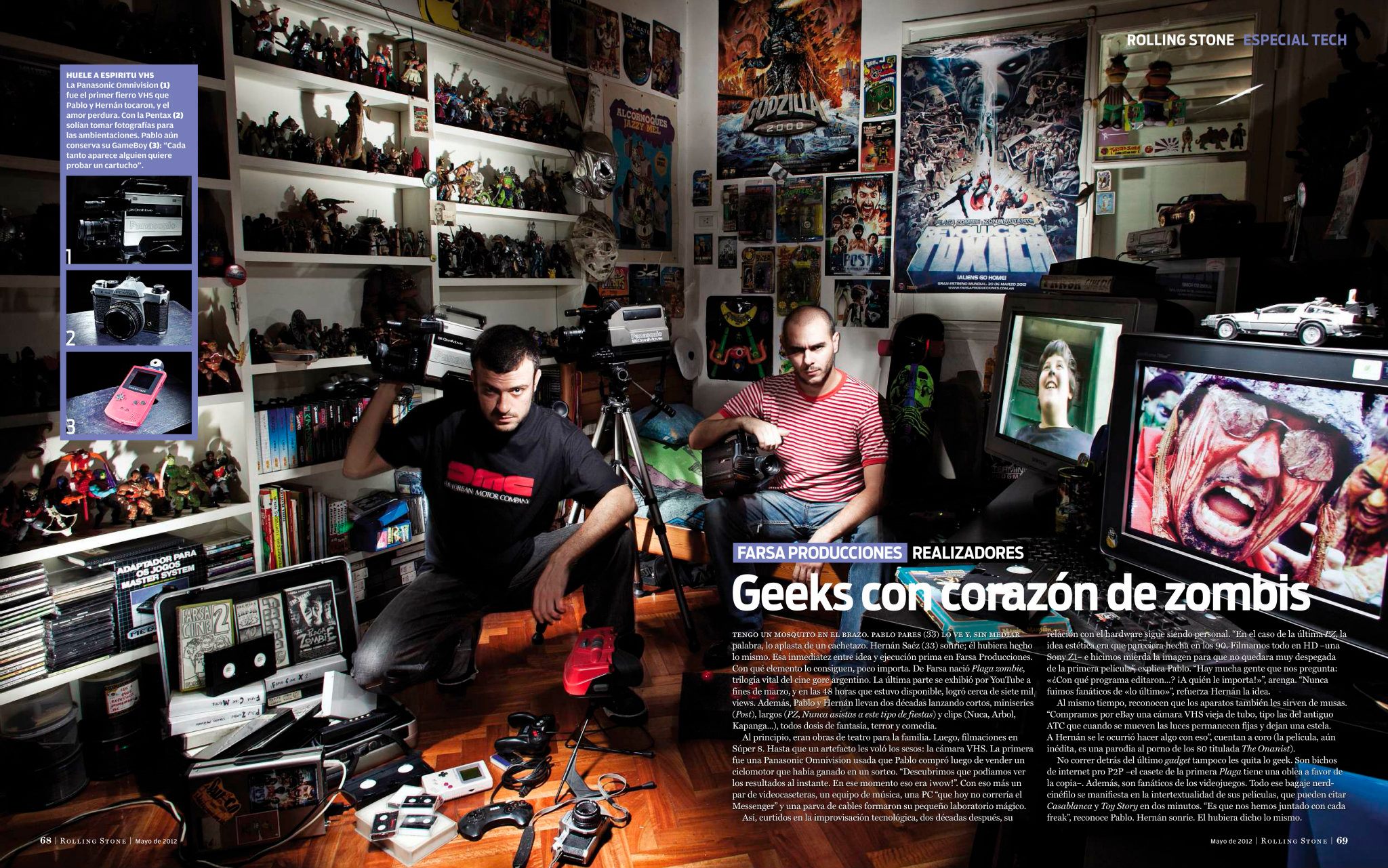
We made Filmatron as a way to express through film how we see the Argentine film industry. It is a kind of protest piece, a critique of the current state of the system.
The film took four years to complete. It was a no-budget production, fully self-financed with income from our day jobs. Filmatron is a truly independent project made by a small group of film lovers. A team of just ten people handled every aspect of production.
We shot the film using a Sony PD150 DV camera, which was the standard at the time. Today, we use a Canon 7D because it allows better lens options and improved image quality.
Looking toward the future of film distribution, we are focusing on our YouTube channel. We believe the future of entertainment is on the web, where creators can connect directly with audiences, without intermediaries.
Camera: Sony PD150 DV
Budget: ?
2033
(Francisco Laresgoiti)

2033 is a deeply personal project. At its core, it is a story about the relationship between a father and his son, but it also reflects a possible vision of Mexico's future.
The film was shot over 33 days across 20 locations, with a budget of 2.5 million USD. Many of the locations were provided at no cost. It was filmed on 35mm using an Arricam Lite camera, aiming for a precise visual texture and depth of field. The color design combines saturated and desaturated tones to emphasize extreme heat, tension, and sterile environments.
Distribution in Mexico remains chaotic, and while digital platforms offer new opportunities, they are also vulnerable to irregular practices.
Camera: Arricam Lite
Budget: U$ 2.5 million
Abandonados
(David Contreras)

The motivation behind Abandonados comes from a deep desire to tell a story that carries both meaning and legacy —something born from the heart. This film weaves multiple narrative layers into a structure that gradually leads the audience toward the simplest and most essential truth of life: love.
Its protagonist, Professor Fernando Cortés (played by Chilean actor César Rojas), is stripped of all material possessions, allowing the film's message to become universal. Love is presented as something that can only be lived in the present moment, because the future is uncertain.
Abandonados reminds us that now is the time to change, to pause, appreciate a flower, watch the sunrise, and tell others how much they mean to us. The central message is simple yet profound: "This is our time to breathe and to love". I believe we all know this truth deep down—we only need to live it more consciously and become better human beings. Time is short, and the more we understand that, the more we can appreciate this shared journey across our planet.
Originally, Abandonados was conceived as a single 90-minute film. However, as the footage expanded and the narrative evolved, the story naturally grew into a trilogy, following the protagonist through multiple stages of life like a saga.
This became Abandonados: The Gone Trilogy, composed of Part I: Water War, Part II: The Journey of Cortés, and Part III: Hope Mission, each with an approximate runtime of 90 minutes.
I have always been drawn to stories that slowly immerse the viewer, allowing them to connect deeply with the characters and experience their emotions, struggles, and journeys as their own.
The filming took about two months, but production spanned two years (2008–2009) across various regions of Chile. We began in the mountains of Antuco and continued in cities such as Los Ángeles, Concepción, Penco, Tomé, Osorno, and Santiago.
The process was filled with creativity, improvisation, and collaboration. It was also physically demanding, with long days, exhaustion, dust, and very little food. At times, it felt as if we had become the characters we were portraying —displaced, worn, and vulnerable. Yet we remained united by passion, love, and joy.
This was a deeply human and transformative experience for everyone involved. As my colleague Rolando Guzmán once said, "Humanity is humanity... all the time, and this film reflects that". I believe this with humility.
The entire trilogy was produced on a budget of just $3,000. Despite its limitations, it was made possible through collective effort and creativity. More than 500 people participated, both on screen and behind the scenes, and that fills me with pride and gratitude.

We shot the film using DVCAM and DV formats, combining them according to available resources. The visual style blends fiction with documentary realism, relying heavily on handheld camera work and natural lighting to enhance authenticity.
One of the most memorable production moments involved the character Valentina, the granddaughter of Professor Cortés, who dies after the catastrophe. In one scene, Cortés finds a doll that reminds him of her.
While filming in the mountains and facing financial constraints, we realized we needed two identical dolls —one for pre-catastrophe scenes and another, partially burned, for the aftermath.
Producer Rogger Zañartu and I searched across the city of Los Ángeles, visiting countless toy stores without success. Finally, we found the last shop, entered with hope —and there she was. We immediately knew: "This is her".
We explained that we needed two identical dolls for a film. The shopkeeper spoke with his manager and returned with both dolls as a gift. It was a magical moment —we had found Valentina and her stunt double, ready for the Chilean Andes.
Today, we are finalizing post-production on SINO (Destiny), a suspense drama filmed in the Andes in 2010. It tells the story of a young couple facing life-changing events in an isolated, icy landscape.
At the same time, we are preparing our next production, ZOHE, a science fiction film set in the year 2084 in a post-catastrophe world, filled with action and visual effects.
As for the future of film distribution, I remain optimistic. Films will continue to find audiences —whether in theaters, physical media, or online. Independent creators now have more opportunities than ever to share their work globally. The landscape is changing, but possibilities are growing, and there is room for every story —especially those made with heart.
Camera: DVCAM
Budget: U$ 3.000 (trilogy)
SHORT FILMS
Survivors
(Diego López)
Survivors is a short film I shot over two intense days during a single weekend. The film was set in the garage of the lead actor’s house, which I creatively transformed into a rundown warehouse to match the story’s atmosphere. Originally, I planned to shoot with a basic video camera, but thanks to one of the actresses —who offered her Canon T3i— the project achieved a much higher visual quality.
The story takes place in a post-apocalyptic world invaded by aliens. In this hostile environment, a group of survivors struggles to stay hidden and alive, but tension quickly escalates, leading to betrayal driven by a crucial "special" situation revealed throughout the plot.

Post-production took a significant amount of time, as I handled the editing myself during my spare time, carefully shaping the final cut.

This short film is part of a broader collaborative online project aimed at producing a feature-length film titled Space-Time Experiment. I hope this initiative will inspire more creators to join and contribute to the collective effort.

Camera: Canon T3i
Budget: U$ 50
Rosario necesita héroes
(Daniel Del Grande)

The camera I used is an old Kodak, originally designed for still photography at around 7 megapixels—at least as far as I remember. I don't have it with me now, but its video function is very limited and far inferior to its photo capabilities. Still, it was the only tool available at the time.

The budget was practically nonexistent. I work with whatever resources I can gather, since this is not a professional production, at least not yet. Financial gain is not the objective.
As for my motivation, it's difficult to summarize in a few words. What I can say is that, over time, I hope to share a deeper spiritual journey —my own path— and everything I have learned along the way.
Camera: 7 megapixels Kodak
Budget: ?
Ciencia Ficción: La creatividad de un artista
(Pablo Riquelme)
Most of the short film was shot over the course of three days, mostly in the living room of a house, where Roberto, a screenwriter, works at his old typewriter. He has been asked to write outside the science fiction genre, but the monsters hiding in his wardrobe refuse to let him abandon his imagination. These creatures become a metaphor for creativity itself, pushing him to remain faithful to what he loves.
Beyond the interior scenes, the film includes two dreamlike sequences, one on a beach and another in a mansion, both completed in a single day. In total, the production took four days.
I made this film because I have always loved B movies. I grew up watching Critters, The Fog, Night of the Creeps, among others. In Spain, science fiction has often been undervalued, and this short film is also a reflection on that reality: a writer pressured by the industry to abandon the genre he loves, forced to choose between commercial demands and creative identity.
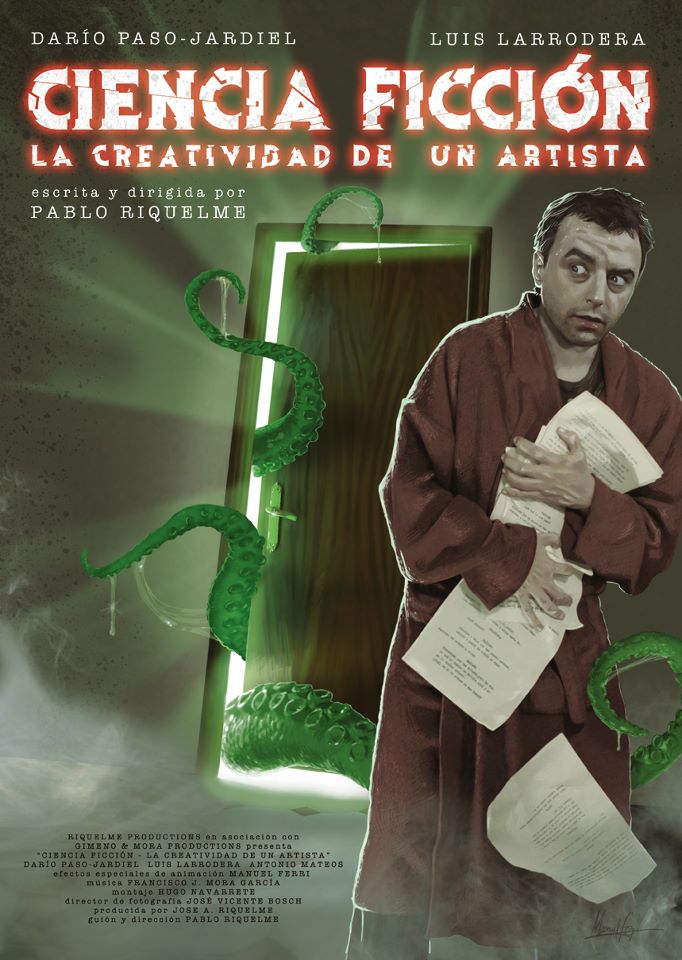
One of the most important elements of the film is the creation of the monsters, developed using stop-motion animation, inspired by the classic techniques of Ray Harryhausen and his legendary creatures. This approach gives the film a distinctive visual identity and sets it apart from conventional short films.
One of the most curious anecdotes is that the two lead actors never shared the set due to scheduling issues. They filmed separately, but in the final edit it appears as if they are interacting in the same space, similar to the technique used in Heat (Michael Mann, 1995) with Al Pacino and Robert De Niro.

The budget for the film was €9,000 (approximately $11,000 USD), made possible thanks to the support of private companies that believed in the project. In Spain, filmmakers often rely either on public subsidies or private investment. In our case, we chose the second option to avoid the delays and uncertainties that sometimes affect publicly funded productions.
We shot the film using a Red One camera, which provided high-definition image quality and flexibility in post-production. The visual style is clean, with strong whites that were later adjusted by deepening the blacks and adding a slight green tint, a palette chosen to reinforce the science fiction atmosphere. We did not use 35mm due to budget constraints and because digital cinematography already offers excellent results.
Film distribution is changing rapidly. Audiences today consume content instantly and expect immediate access rather than delayed releases or high physical media costs. Streaming platforms and digital distribution open new possibilities for filmmakers and viewers alike.
Camera: Red One
Budget: U$ 11.000
Decapoda Shock
(Javier Chillon)

Camera: Canon XL-H1 HDV
Budget: € 1.500
WEBSERIES
Styncat
(?)
Cacahuetex was born from a shared love of films, series, and TV shows that shaped the team's childhood. What started as a hobby —shooting sketches and short films— gradually evolved into an audiovisual collective. From the beginning, the goal was always to create something bigger: a film or an original series.
When they discovered an online web series competition, they saw the perfect opportunity to take that leap. Instead of following the familiar sitcom format common in web series, they chose a more daring approach. That's how Styncat was born: a high-energy blend of action, comedy, and science fiction inspired by the stories they grew up with. Winning the contest was never the main objective—the real motivation was to bring their idea to life. Even without winning, they kept going—and saw the project through.
The production of Styncat took more than a year, and as their first major project, it came with plenty of challenges and memorable experiences.

One of the most memorable experiences took place at a key location used for the final episode's action scenes. From the start, the team felt the place was cursed —nothing ever went according to plan. Although it was an open space, access required a key, and every time they obtained it, something had changed: the lock, the schedule, or the availability. At times, the space was occupied by gym classes or even large concerts with hundreds of people. Despite all these obstacles, they managed to complete the shoot, and the final result exceeded expectations.
Another anecdote comes from a trip to Toledo, a city famous for its steel and sword-making tradition. While searching for props, they found a shop where the owner offered them a pair of extremely cheap —and very unusual— zebra-striped katanas. They bought them, and those swords eventually became part of Styncat's visual identity. Now, whenever someone sees a zebra-patterned katana, it instantly evokes the series.
The series was filmed using three Canon 550D cameras. The choice was purely practical: they needed affordable equipment that could still deliver solid image quality for a YouTube-based production.
Visually, the team aimed for a conspiratorial and mysterious tone, achieved through a cold, bluish color palette that defines the series' atmosphere.
The project began with a budget of €450, with additional funds added as needed. Most of the expenses went toward transportation to filming locations. Although there's no exact final figure, the total cost is estimated to be under €1,000.

The world of web series has grown enormously in recent years. Today, almost everyone has a camera —even in their pocket— and anyone can upload content online. This accessibility is a major advantage, but it also means the internet is saturated with content, making it increasingly difficult to stand out. Even strong ideas and solid execution don't guarantee visibility.
The team believes the internet is a powerful platform where new talent continues to emerge. However, there is still a need to recognize that online content can be just as valuable as traditional film or television. In fact, Styncat itself reflects on this reality, questioning how internet culture often rewards randomness over quality and how that shapes the perception of digital creations.
Camera: Canon 550D
Budget: € 1.000
Genesis 88
(Franc Sellers)
The team's main motivation was to enjoy the creative process, learn along the way, and bring a fictional story to life —along with characters that eventually became deeply loved. The project was born from a genuine passion for storytelling and the simple pleasure of creating. The first season consists of thirteen episodes and was conceived with continuity in mind. In fact, the final episode was written with an open ending, leaving the door open for future seasons.

The series was shot using a Canon 60D DSLR camera, chosen for its practicality. With no budget available, it offered the best image quality within their means. Visually, the creators aimed for bright, vivid colors inspired by the original drawings featured in the opening credits and key scenes, evoking a comic book aesthetic. At the same time, they blended this style with the visual language of Latin American soap operas, incorporating elements of suspense, mystery, action, humor, and science fiction as a tribute to the genre.
The production received no financial support or subsidies. It was entirely self-funded, with all expenses covered by the creators themselves. Filming took place on weekends due to work, family, and personal commitments. Despite these challenges, the project moved forward driven purely by passion and dedication. The team sees the internet as an essential platform for independent creators, offering visibility and reach that were not possible in the past.
The production process was filled with memorable anecdotes, but one stands out. During a key scene set in a restaurant parking lot, the team had already filmed there multiple times. On the final two sessions, however, they ran into trouble. They began shooting around 8:00 p.m., when the restaurant manager approached and informed them they had just 30 minutes to finish before a bus full of guests arrived. Against all odds, they managed to capture twelve or thirteen takes with excellent results. What seemed nearly impossible turned into one of their most successful shoots —an unforgettable moment for everyone involved.
Camera: Canon 60D DSLR
Budget: ?
Martin Mosca
(Mariano Cattaneo)
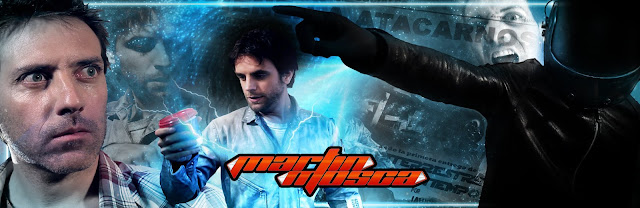
Martin Mosca is a science fiction comedy about an ordinary man who builds a time machine, only to use it for trivial and personal purposes. However, he soon discovers that tampering with time can have serious consequences, altering the natural order of the universe and putting both his life and the lives of those he loves at risk.
The concept was inspired by classic 1980s sci-fi and adventure films such as Back to the Future, The Terminator, Weird Science, Ghostbusters, Indiana Jones, and Superman. These influences helped define the tone, humor, and spirit of the series.

Each episode's budget varies depending on the demands of the script. As with many independent productions, teamwork is essential. Everyone involved contributes according to their abilities and resources, and the human commitment behind Martin Mosca is invaluable. While platforms such as YouTube, Facebook, Google+, and Twitter provide broad visibility, there is still a lack of formal distribution channels willing to take risks on web series and offer sustainable compensation to creators.
Creating an independent web series requires constant adaptation. With limited budgets and tight schedules, improvisation becomes essential, and every challenge must be solved in real time.
One memorable anecdote occurred during the filming of episode eight, which included a cemetery scene. Without time or permits —which in Argentina can take weeks— the team filmed guerrilla-style, entering as regular visitors. The actors, in full costume, hid behind tombstones while performing their scenes. Surprisingly, many passersby asked them for directions without noticing anything unusual.
The series was shot using different Canon DSLR cameras, including the 5D, 7D, 60D, T3i, and T2i. These tools provided accessible yet powerful full HD (1920x1080) image quality, transforming consumer cameras into reliable instruments for independent filmmaking.
Martin Mosca is the result of a collaborative effort by Mariano Cattaneo (director), Leandro Cóccaro (actor), Hernán Márquez (actor), and Pablo Boyanovsky Bazán (writer/producer).
Camera: Canon DSLR 5D, 7D, 60D, T3i, and T2i
Budget: ?
Justice Woman
(Vanessa Verduga)
Six years ago, Justice Woman was just a domain name that happened to be available, so I bought it because it sounded cool. I grew up loving Wonder Woman and especially Batman, a hero without superpowers who still cared deeply about Gotham. After graduating from law school, I realized I didn't want to practice law, but I needed to pay my bills, so I opened my own practice and worked as a lawyer for two years. That period became the origin of Justice Woman.
Working in law was an eye-opening experience. I saw how the legal system, and those who operate within it, can be used for both justice and injustice under the same rules. That realization pushed me back toward acting. I enrolled at the American Academy of Dramatic Arts, and that's when I began writing seriously.
After graduating, I needed an acting reel, but the process of assembling one was frustrating. I spent more time chasing down directors for footage than actually building my portfolio. Eventually I decided to create my own project instead, bringing to life the Justice Woman story that had been forming in my mind.
While developing the series, global events around me made me want to speak not only for myself but for others who had experienced injustice. I began writing about inequality, including homophobia, immigration, discrimination, hypocrisy, class privilege, political corruption, and more. To balance the weight of these themes, I followed Oscar Wilde's idea that humor can be the best way to tell difficult truths.

As a fan of Batman and Sin City, I always imagined Justice Woman with a gritty comic-book aesthetic. We achieved this mainly through lighting and color grading in post-production.
At first, I planned only a pilot episode, but I was too excited to wait for a network, so I chose the web series format. I was inspired by Felicia Day and her series The Guild. Without film school training or a large budget, I took on multiple roles as writer, director, producer, and lead actress.
The project came together thanks to friends and collaborators who offered locations, props, time, and support. Many of the cast members are close friends from theater, film, and even law. That trust and connection shows on screen.
For season one, we shot with a Canon EOS 7D. In season two we upgraded to a Canon EOS 1D Mark IV, and later returned to the 7D for the following seasons due to budget and accessibility. Each change depended on the equipment available at the time.

We started Justice Woman with just 2000 dollars. I worked weekends on the series while saving during the week, bartered services, and relied heavily on favors from friends and family. Every contribution, no matter how small, helped move the project forward.
The series is planned for six seasons and eighteen episodes, though it could continue beyond that. For me, the story reflects an ongoing struggle for justice that never truly ends. Advances in technology and web distribution have made it possible for independent creators to reach audiences directly, without traditional barriers.
Today, I see filmmaking as more accessible than ever. Anyone with determination can tell their story, and the internet has opened the door to voices that previously had no platform.
Camera: Canon EOS 7D and EOS 1D Mark IV
Budget: U$ 2.000
COMICS
Planeta Inquietante
(?)
Planeta Inquietante is a comic that works both as a parody and a tribute to the Ancient Astronauts theory, popularized in the 1970s by Erich von Däniken. This theory suggests that extraterrestrials visited Earth in ancient times and influenced early human civilizations. According to its supporters, these beings contributed to technological development, inspired myths, and were even perceived as gods.

The creative team behind the comic includes José Ramírez as magazine editor, with artwork by Gustavo Rubio, Ángel Bernuy, Jen del Pozo, and Conrado Martín. The script and creative direction are led by Adolfo Rodríguez.

While comics are gaining more visibility today, the team remains uncertain about whether publishers truly understand how to translate this growing interest into a broader readership. They emphasize that print comics and webcomics should not be seen as opposing formats, but as complementary ones that can coexist and even strengthen each other.
The reading experience varies depending on the medium, whether it is influenced by screen size or the tactile nature of print. These differences should guide publishing strategies. Ideally, digital comics should move beyond simple PDF versions of printed pages and instead take advantage of the unique possibilities offered by digital platforms.

Cosmic
(?)

Cosmic is a comic magazine that brings together multiple stories and artists. The project was born years ago, inspired by the legacy of Máximo Carvajal, a renowned Chilean comic artist and mentor to editor Fyto Manga. Before his passing, Carvajal encouraged him to never stop fighting for Chilean comics, a message that became the driving force behind the project.
While collaborating on projects for other creators, Fyto began developing his own characters and stories, gradually building a shared universe. He later invited other artists to contribute their own narratives, giving rise to a multiverse. Cosmic currently features seven interconnected storylines, all subtly linked. Most of the protagonists are children or teenagers, united by the concept of bio-acceleration, a unique condition that grants them special abilities.
The creative process begins with story development, which is then divided among the writers. Once a script is completed, it is assigned to an artist who creates a layout. After approval, the final artwork is produced. Throughout the process, the team ensures consistency within the Cosmic universe, maintaining connections between stories in a subtle but meaningful way.

The Cosmic team is small but versatile. Paulina Verdejo, an electronics engineer and comic enthusiast, serves as editorial director. Fyto Manga, a comic artist and illustrator, leads as editor. Creative support comes from Juan and Pedro, while Pedro and Valentina handle scriptwriting. Nell is responsible for publicity and advisory, and the group of artists includes Jade, Cecy, Crispawn, Rina, Romina, Sergio, and Pablo.
Although Cosmic is currently a local publication, copies are available internationally via traditional mail. The team has already shipped issues abroad, including to readers in Italy.
The team believes the digital era is reshaping the comic industry, and Cosmic is no exception. Readers increasingly expect fast, online access, often enhanced with multimedia elements. Webcomics clearly represent the future. However, print editions still hold strong emotional and cultural value, and for many readers, a physical comic remains something special.
In terms of distribution, webcomics can reach a much wider audience than print, especially when freely accessible. This creates a challenge: balancing free access with sustainable funding, whether through direct sales or sponsorships. Both options come with difficulties. Some creators rely on visibility and audience growth to attract sponsors, while others take a more gradual approach. The Cosmic team has chosen a steady path, but remains open to expanding into the digital space as their universe continues to grow.
Black
(Julio Acuña Formador)

Black was born when I was thirteen years old. At the time, I dreamed of creating a superhero inspired by Tim Burton's Batman and Carl Macek's Robotech —a strange mix, I know, but I was just a kid. Over the years, that initial idea evolved, and through it I discovered my passion for storytelling.
By 1997, the concept had transformed into what Black is today, a project that is still ongoing. At first, I simply wanted to draw a cool, modern superhero and dreamed of being published in the United States. Over time, however, the focus shifted. Black became a story about Chilean teenagers, their everyday lives, and the mistakes we all make while growing up. These characters live, love, fear, cry, and evolve. To me, they feel like my own children, and when I write, I believe readers can sense that connection. That emotional bond is a big part of why the series resonates.
I've always admired many artists. Among Chileans: Themo Lobos, Mario Igor, and Genzoman. I also deeply respect Lucho Olivera, Rubén Meriggi, Ariel Olivetti, Mandrafina, Toppi, Nik, and, of course, Quino.
When it comes to the future of comic distribution, I can only speak from my experience in Chile. Print still plays a major role. Although digital comics are growing, physical editions remain popular. Many readers download comics online and then go out to buy printed copies. One local publisher that distributes Marvel and DC titles has shown that there is still strong demand for print.
That said, print publishing comes with challenges. It is expensive, and there are few comic publishers in Chile. Most creators, including myself, have to self-finance and publish independently. On the positive side, this creates a closer relationship with readers. Handing someone a physical copy and receiving immediate feedback is incredibly rewarding and helps build a grassroots distribution network.
Digital publishing also has clear advantages. It is cheaper and more accessible —requiring only basic tools and an internet connection. However, internet limitations in Chile and the complexity of some platforms can be obstacles, so many creators rely on simpler tools like Blogger or WordPress, along with social media. The greatest benefit of digital distribution is its global reach, allowing work to travel faster and connect with a wider audience.
I am currently planning to publish Black in the United States. An English version is on the way, marking our first major step toward international expansion.
Over the past three years, many memorable moments have come from interacting with readers. Fans have become an essential part of the series. They comment, suggest ideas, and even debate the characters' relationships —especially the love triangle between Eric, Claudia, and Inés. Some readers strongly support Claudia, while others believe Eric should move on. It's both funny and inspiring. In fact, some readers have even contributed technical information that has found its way into the story.
I've experienced this same enthusiasm at comic conventions in Chile, where readers share feedback and connect deeply with the characters. For me, that interaction is what truly keeps a comic alive.
Many of the characters are based on real people. Eric represents me during my high school years. Alberto, also known as the Boogie Man, is inspired by my friend Alfredo Santana. Víctor is based on a former "bad boy” who used to call me "Teddyyyyyy…". Claudia is a blend of girls I liked in the past, while Inés reflects a part of myself —my Christian side— and a bit of Winona Ryder in Lucas.
Black is created by just two people: my fiancée Loredanne and me. I handle writing, drawing, inking, and screentones, while she works as editor-in-chief.
Black is, without a doubt, the work of my life.
Tinkers of the Wasteland
(Raul Treviño)

I handle every part of the comic myself, from writing to illustration. Even so, I regularly meet with other artists to exchange feedback and refine ideas, which helps the story grow in unexpected ways. One of the most rewarding aspects has been interacting with readers. For the English version, I invited fans to help correct grammar and typos in exchange for credit in the acknowledgments. It has been a very enriching experience, especially since English is not my native language. Cosplay hasn't happened yet, but I hope it does someday. Seeing someone embody these characters would be an incredible milestone. Most characters come entirely from imagination, except for King Queer, who was inspired by Frank from The Rocky Horror Picture Show. I've always been fascinated by bold, theatrical villain archetypes. Baron Ashura from Mazinger Z is another clear influence. In Latin America, there are many artists I admire. José Ladrönn is not only a respected colleague but also a close friend who has guided me since my early days. Fco. Ruiz Velazco and Humberto Ramos also offered support when I was starting out, and I'm deeply grateful to them. Regarding the future of comics, I don't believe print will disappear. I see a shift toward a balance of roughly 70% digital and 30% printed editions. Physical publishing will likely become more specialized, focused on collector's and limited editions. It's a transition I find both natural and exciting.
Comics distribution is clearly shifting toward digital platforms, but printed books will not disappear completely. In my view, the future will be divided between digital publishing and a smaller percentage of physical editions, which will become more curated and collectible. It's a transformation worth watching closely.

Comparte esta publicación en tu


Publicar un comentario